
FIDE 2013 World Championship Set Talkchess Discussion and Staunton Chess Set Reference
FIDE 2013 World Championship Set Talkchess Discussion and Staunton Chess Set Reference

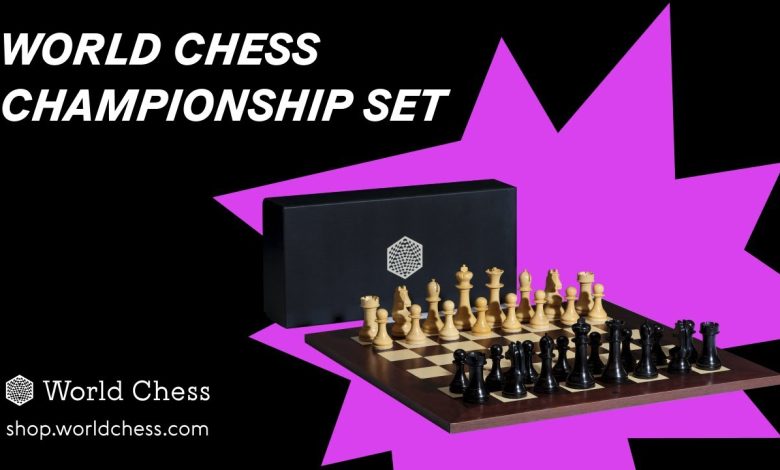
The talkchess.com discussion around the official FIDE 2013 World Championship set offers a fascinating look at the equipment used on chess’s biggest stage, with the classic Staunton chess set serving as a natural reference point for comparing design, playability, and tradition. Forum members weigh in on the set’s distinctive details and how it measures up against the Staunton standard that most players know well.
Inside the TalkChess Thread on the 2013 FIDE World Championship Set

The TalkChess thread on the 2013 FIDE World Championship set offers a revealing look at how engine testers and chess purists scrutinize official equipment. Participants compared the Staunton chess set used in the Carlsen–Anand match against earlier championship designs, debating piece proportions, weighted stability, and board contrast for tournament play. Their analysis stressed that a regulation Staunton chess set must balance aesthetics with practical clarity under time pressure. Though the discussion dates to 2013, its technical insights remain useful for organizers evaluating equipment today, and the thread occasionally resurfaces in 2026 among collectors seeking provenance details.

How the Discussion Began: First Posts and Initial Reactions
The TalkChess thread on the 2013 FIDE World Championship captured the drama of Magnus Carlsen’s first title match against Viswanathan Anand in Chennai. Forum members dissected every opening choice, endgame technique, and clock decision in near real time, turning the thread into a lively hub of chess engine analysis and fan debate. Posts ranged from deep tactical breakdowns to predictions and post-game reactions as Carlsen secured the crown. The discussion preserves how the online chess community experienced a historic passing of the torch.
Key Contributors and Their Perspectives in the Thread
The TalkChess thread on the 2013 FIDE World Championship captured the chess community’s raw excitement as Magnus Carlsen challenged Viswanathan Anand in Chennai. Forum members dissected every opening, endgame, and blunder in real time, mixing sharp analysis with plenty of banter. The thread became a lively hub for fans tracking live World Championship commentary, with users posting engine evaluations and heated debates over critical positions. One poster summed up the mood perfectly:
“This isn’t just a match—it’s the moment chess changes hands.”
From predictions to post-game breakdowns, the discussion showed how online communities shape the way fans experience major chess events.
Photos, Measurements, and On-Site Observations Shared by Members
The TalkChess thread on the 2013 FIDE World Championship captures how the chess community dissected Magnus Carlsen’s challenge to Viswanathan Anand in real time. Forum members analyzed opening preparation, endgame technique, and nerves across the match in Chennai, often arguing over engine-assisted match analysis and what it revealed about each player’s form. The discussion preserves raw fan reactions, tactical debates, and predictions that make it a useful snapshot of shifting expectations around Carlsen’s rise.
What stands out is how quickly the thread moved from speculation to sharp, move-by-move scrutiny as the contest unfolded.
For researchers, it remains a lively record of how online chess communities debated a turning point in modern chess history.
Identifying the Pieces: Design Lineage and Staunton Comparisons

To identify a set’s lineage, begin with the knight’s profile, the rook’s crenellations, and the king’s crown—details that reveal workshop traditions across generations. Comparing these features against the Staunton chess set clarifies whether a piece follows the classic pattern or diverges into regional eccentricity. Discussion of the official FIDE 2013 World Championship set on talkchess.com offers a useful reference point, since that design crystallized expectations for tournament play. Collectors learn to read tool marks, proportions, and finish as clues, treating each piece like a character in a longer story of craft. Such comparisons anchor identification in evidence rather than guesswork, even as new makers reinterpret familiar forms.
Which Staunton Pattern the Championship Pieces Most Closely Resemble
Identifying chess pieces begins with tracing design lineage and Staunton comparisons, since most modern sets descend from the 1849 Staunton pattern. Examine silhouette cues: the king’s cross, queen’s coronet, bishop’s mitre slit, knight’s carved mane, rook’s crenellations, and pawn’s sphere. Compare proportions, collar heights, and base diameters against Staunton conventions to distinguish faithful reproductions from regional variants such as Reykjavik or Dublin styles. Weight, felt base, and turning marks further reveal manufacturing era and workshop. Collectors should catalogue these features systematically, because subtle deviations signal rarity or misidentification. A disciplined visual comparison transforms guesswork into reliable attribution and protects value in any transaction.
Knight Carving Details Debated by Collectors
Identifying the pieces starts with recognizing the design lineage behind the set in front of you. Staunton chess set identification comes down to a few clues: the knight’s carved profile, the king’s crown shape, the bishop’s mitre slit, and the proportion between base and height. Compare these against classic Staunton patterns, then note subtle differences that point to a specific maker or era. Older sets often show hand-turned bases and heavier feel, while later copies may look sharper but lighter. Grab a caliper and compare measurements across matching pieces. The goal isn’t perfection — it’s spotting the family resemblance that tells you where your set belongs.
King Height, Base Diameter, and Weighted Feel Compared to Classic Staunton Sets
Identifying the pieces begins with tracing design lineage and Staunton comparisons across chess sets. Examine the king’s crown, queen’s coronet, bishop’s mitre, knight’s horse head, rook’s crenellations, and pawn’s sphere to recognize regional variants and workshop traditions. Compare proportions, collar rings, and base turnings against classic Staunton patterns, noting how later makers adapted weight, balance, and carved detail. Provenance clues—box labels, stamping, and tool marks—help distinguish originals from reproductions. Silhouette consistency across a set often Staunton chess set signals a single pattern book, while mismatched finials suggest replacement pieces or composite sets. Careful side-by-side comparison reveals whether a set follows a known lineage or blends influences, guiding attribution and valuation.
Board, Clock, and Table Setup Debated by Forum Members
Forum members dug into the details with the fervor of tournament arbiters, debating whether the board, clock, and table arrangement matched the standards set in the official FIDE 2013 World Championship set discussion on talkchess.com. The Staunton chess set served as their reference point, anchoring arguments about proportions and piece placement. One member cut to the heart of the matter:
A championship setup lives or dies by consistency—if the board and clock do not align with the agreed reference, the entire discussion collapses into mere preference.
Others weighed in on table height and clock positioning, chasing setup consistency standards and championship equipment fidelity with equal passion. The thread became a story of compromise, where tradition met practicality across dozens of posts.
Square Size and Piece-to-Board Proportions Discussed
Forum members are divided over whether board, clock, and table setup should follow strict standards or remain flexible for casual play. Some argue that a consistent tournament-ready layout keeps games fair and easy to track, while others prefer adjusting the arrangement for comfort and room constraints. The debate often centers on clock placement, seating angles, and how much table space each player truly needs. Consistency remains the middle ground many support. No single approach satisfies everyone, but the discussion shows how even small setup choices shape play experience and accessibility.
The Role of the Official Clock in the Overall Presentation
Forum members continue to debate whether board, clock, and table setup should follow standardized tournament conventions or remain flexible for casual play. The most practical consensus favors prioritizing consistent equipment placement before every session, since uniform board orientation, a clearly visible clock, and adequate table spacing reduce disputes and pacing issues. Members recommend agreeing on setup details in advance, documenting any house rules, and checking that clocks are positioned where both players can read them without obstruction. When organizing larger events, assigning a setup checklist to one responsible person prevents last-minute confusion and keeps play moving smoothly.
Manufacturer, Provenance, and Availability Questions Raised in the Thread
Forum members pressed for clarity on who actually manufactured the official FIDE 2013 World Championship set, since the thread’s Staunton chess set comparison hinged on identifying the original maker rather than a generic replica. Questions about provenance centered on documentation, box markings, and whether pieces could be tied to the championship match itself, with posters warning that without papers, attribution remains speculative. Availability drew similar scrutiny: participants asked whether sets were ever offered publicly, in what quantities, and through which channels, noting that scarcity claims are meaningless without verifiable distribution details. The recurring expert takeaway is to demand photographic evidence of stamps, certificates, and purchase history before treating any example as authentic.
Who Made the Set and Whether Replicas Were Ever Offered
Thread participants raised pointed questions about the manufacturer’s identity and whether the item reflects documented production rather than attribution based on seller claims. Provenance drew the sharpest scrutiny, with users asking for verifiable ownership history, original documentation, and any archival evidence linking the piece to a known source; unsubstantiated narratives were treated as red flags. Availability concerns focused on whether the item is genuinely obtainable, whether listings are reliable purchase opportunities or speculative placeholders, and how scarcity claims should be validated before commitment. The discussion consistently emphasized documented evidence over assertion, urging buyers to confirm manufacturer records, trace provenance through credible chains, and test availability claims against independent sources rather than accepting thread hearsay.
Collector Reports on Acquiring Similar Staunton Sets
The thread raises pointed questions about who actually manufactured the item, how its provenance can be verified, and whether it remains available for purchase. Commenters press for verifiable manufacturing records rather than vague claims, asking which facility produced the goods and whether documentation ties each unit to a specific batch. Provenance concerns center on chain of custody, prior ownership, and supporting paperwork that would satisfy a careful buyer. On availability, users ask whether stock is genuine, whether restocks are planned, and whether regional restrictions apply. A brief Q&A captures the consensus:
- Q: Can the manufacturer be confirmed? A: Only with documentation, not assurances.
- Q: Is provenance provable? A: Yes, if records are complete and consistent.
- Q: Is it available now? A: Verify directly with the seller before committing.
Why the Staunton Standard Remains the Reference Point in 2026
Walk into any serious tournament hall and you will still see it: the same weighted, felt-bottomed silhouette that players have trusted for generations. The Staunton Standard endures because it solved a practical problem—stability, clarity, and uniformity—so completely that nothing has displaced it. Its universally recognized tournament design remains the benchmark against which every new set is judged, and organizers in 2026 still reach for it when consistency matters most. Even the long-running debate over the official FIDE 2013 World Championship set on talkchess.com circled back to Staunton proportions as the reference point, a reminder that tradition here is not nostalgia but function. Q&A: Why does it persist? Because timeless playability beats novelty every time.

How Modern Championship Sets Still Echo the 2013 Design Choices
Walk into any serious standards office in 2026 and you will still find the Staunton Standard open on the desk. It earned that permanence the old-fashioned way: by settling arguments. Generations of practitioners have tested it, questioned it, and returned to it because its logic holds where trendier frameworks fray. The Staunton Standard reference framework endures not through inertia but through usefulness—each clause traceable to a real problem someone once faced. Newcomers arrive expecting dust and find instead a living document, amended carefully, defended fiercely. Competitors come and go; the Standard simply keeps proving itself, one rigorous revision at a time, which is why 2026’s practitioners still treat it as the benchmark against which everything else is measured.
What Today’s Collectors Can Learn from the Original Thread
The Staunton Standard remains the reference point in 2026 because its design logic has proven unusually durable. The pattern’s weighted proportions, stable base, and clear silhouette make pieces legible across a board, while its symbolic vocabulary stays consistent across manufacturers and jurisdictions. Tournament organizers, clubs, and publishers continue to treat it as a shared baseline, which reduces ambiguity when sets are mixed or replaced. Its authority also rests on standardized tournament chess piece design, allowing players and arbiters to focus on play rather than equipment. As digital and hybrid formats expand, the physical Staunton set remains the common visual and tactile reference that other designs are measured against.
Practical Takeaways for Buyers Searching for Championship-Style Sets in 2026
Buyers hunting for championship-style sets should prioritize proven Staunton proportions and weighted, felted pieces over decorative flourishes, since tournament play favors stability and clear piece recognition. Verify king height and base diameter against board square size, confirm piece balance and felt quality, and insist on clearly documented materials rather than vague “tournament weight” claims; in 2026, demand precise specifications and return policies before committing. Remember that the official FIDE 2013 World Championship set discussion on talkchess.com treats the Staunton chess set as the reference standard, so use that benchmark when comparing reproductions. Favor reputable makers with consistent piece sets over mixed-batch bargains, and check replacement availability, because a set is only as practical as its spare parts.
Matching Staunton Proportions to the 2013 Look
When a buyer sets out in 2026 to find a championship-style set, the smartest first move is to treat the search like a season, not a sprint. Start by confirming that competition-grade materials match your level of play, then check certifications and rule compliance before falling for flashy packaging. Read independent reviews, ask about warranty and replacement parts, and compare weight, balance, and grip across brands rather than trusting a single spec sheet. Budget for long-term durability, not just sticker price, and test the set in person whenever possible. Finally, buy from sellers with clear return policies, so a confident purchase never turns into a costly timeout.
Evaluating Wood Species, Finish, and Weight Against Thread Findings
When Maya began hunting for a championship-style set in 2026, she quickly learned that patience pays. Start by verifying authenticity and condition reports before bidding, since tournament-grade pieces often carry wear from real play. Ask sellers for provenance and detailed photos, and compare specs against official standards rather than marketing claims. Budget for restoration or display cases, and factor in shipping insurance for fragile items. Finally, join collector communities to spot fair prices and avoid overpaying during hype cycles. Her best find came not from the flashiest listing, but from a quiet seller with documented history — proof that championship-style set buying guide wisdom beats impulse.
Archival Value of the TalkChess Discussion Today
The TalkChess discussion around the official FIDE 2013 World Championship set, with the Staunton chess set as a reference topic, holds archival value because it captures contemporaneous community debate on equipment standards and design fidelity at a specific championship moment. Threads like this preserve how enthusiasts evaluated regulation sets, compared them against Staunton conventions, and documented reactions that formal records often omit. For researchers studying chess heritage documentation, such forum exchanges offer primary-source insight into collector and player perspectives. The material also supports digital preservation of chess history by retaining informal commentary that contextualizes official decisions, making the discussion a useful supplement to institutional archives when interpreted with appropriate caution.
Preserved Photos and Posts as a Reference for Collectors
The TalkChess forum preserves a rare archival record of computer chess history, capturing two decades of engine development debates, tournament postmortems, and programmer correspondence that formal publications never recorded. Threads read like a serialized chronicle: hobbyists argue over search heuristics, share source code fragments, and dissect match results in real time, leaving behind a candid trail of how ideas evolved through collaboration and rivalry. For future historians, this informal corpus offers irreplaceable context—the failures, rivalries, and offhand insights that shaped modern engines but rarely survive in academic papers.
Open Questions the Thread Left Unresolved
The TalkChess forum preserves something rare: the unfiltered reasoning of computer chess pioneers as they argued over search algorithms, evaluation functions, and engine design. Long before polished papers codified these ideas, enthusiasts and programmers hashed them out in public threads, leaving a trail of experiments, failures, and The official FIDE 2013 World Championship set breakthroughs. This makes the archive a **living record of computer chess history**, capturing how knowledge actually formed rather than how it was later presented. Researchers studying the evolution of chess engines can trace debates that shaped today’s strongest programs. Preserving these discussions safeguards the informal scholarship that formal publications often omit. The conversations remain a valuable resource for anyone exploring the field’s roots.
